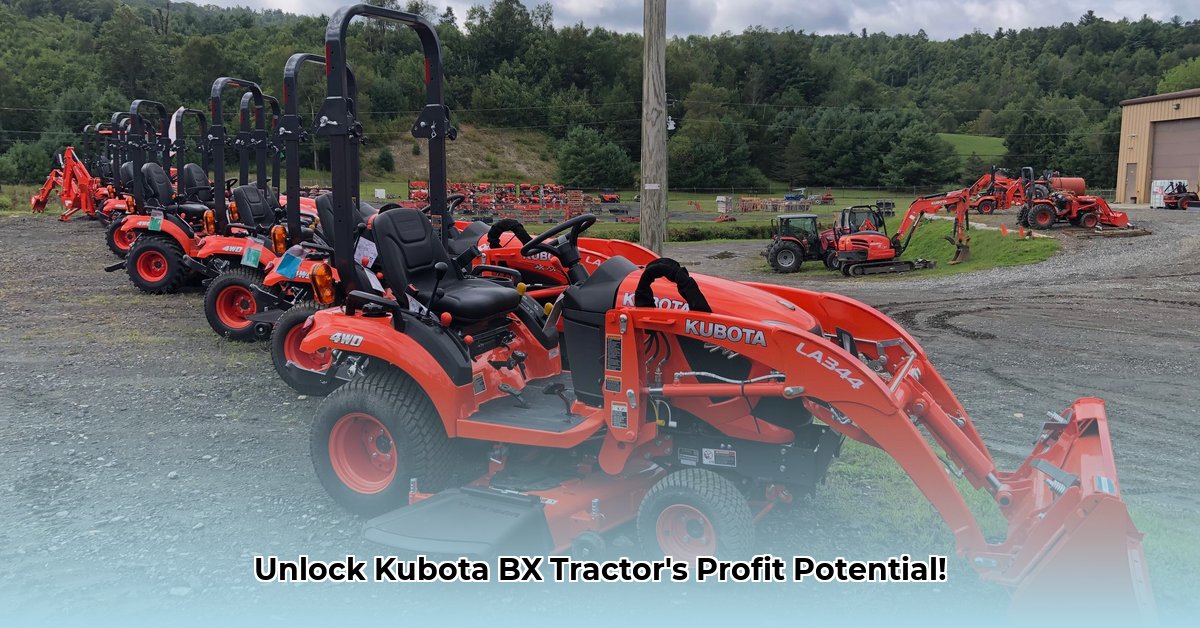
Kubota BX Tractor: Your Key to Sustainable Farming Success
Sustainable agriculture presents significant challenges, especially for smaller farms. Balancing profitability with environmentally responsible practices is a constant balancing act. But what if you could increase efficiency, boost profits, and reduce your environmental impact? The Kubota BX tractor offers a compelling solution, providing a powerful and efficient pathway to sustainable farming success. This guide will walk you through choosing the right BX model, implementing it in your sustainable practices, and navigating the financial and regulatory aspects involved. For more information on potential issues, see this helpful resource: Kubota tractor problems.
Understanding Sustainable Farming and Compact Tractors
Sustainable agriculture focuses on building long-term soil health, conserving resources, and minimizing environmental impact. Compact tractors, such as those in the Kubota BX series, align perfectly with these goals. Their smaller size minimizes soil compaction—crucial for healthy, productive soil. Plus, their fuel efficiency translates directly into lower emissions and reduced carbon footprints. This is a win-win—beneficial for both your bottom line and the planet. Isn't that a compelling reason to explore this option?
Getting to Know the Kubota BX Tractor Family
Kubota offers a range of BX models, each designed to meet various farming needs and scales of operation. Choosing the right model is crucial for optimizing performance and minimizing costs. Factors to consider include horsepower, lifting capacity, and the types of attachments you'll need for your specific tasks. This selection process is about finding the perfect fit for your farm operation.
Choosing Your Perfect Kubota BX: A Step-by-Step Guide
Selecting the appropriate BX model requires careful consideration of several factors. This step-by-step guide ensures you make an informed decision:
Assess Your Land: Determine the acreage you'll be working with. The size of your operation directly impacts the horsepower and capabilities you need.
List Your Tasks: Identify all tasks the tractor will perform (tilling, planting, harvesting, mowing, etc.) This informs the choice of horsepower, three-point hitch capacity, and necessary attachments.
Define Your Budget: Consider the initial purchase price, ongoing maintenance, fuel costs, and potential repairs. Explore financing options, government subsidies, and tax incentives for sustainable agriculture equipment.
Test Drive (If Possible): Hands-on experience provides invaluable insight into the tractor's maneuverability and ease of operation for your specific farming tasks.
Putting Your Kubota BX to Work for Sustainable Farming
The Kubota BX’s versatility makes it ideal for various sustainable agricultural practices:
Precision Tilling: Its maneuverability minimizes soil disturbance, reducing erosion and water loss. How much water could you save?
Efficient Planting: Fewer passes across the field mean less fuel consumption and reduced labor costs.
Targeted Harvesting: The BX’s size allows for precise harvesting, minimizing waste and maximizing yield.
Strategic Mowing: Efficient pasture management reduces the need for herbicides.
Maintenance Matters: Keeping Your BX Running Smoothly
Regular maintenance is essential for maximizing the lifespan and efficiency of your BX tractor. This includes scheduled oil changes, filter replacements, and regular inspections. Proactive maintenance translates to reduced downtime, lower long-term costs, and maximized return on investment. What's your maintenance plan?
Financial and Regulatory Landscape: Navigating the Practicalities
Acquiring a Kubota BX requires careful financial planning. Explore various financing options:
Agricultural Loans: Special financing options often exist for agricultural equipment.
Government Grants and Subsidies: Many regions offer financial assistance for sustainable agricultural practices.
Leasing: Leasing might be a viable alternative, depending on your financial situation and long-term goals.
Insurance: Protecting your investment is crucial; investigate insurance options suited to agricultural equipment.
Always comply with all relevant local, state, and federal regulations regarding agricultural equipment ownership and operation.
Weighing the Pros and Cons: Is a Kubota BX Right for You?
Pros: Fuel efficiency, reduced soil compaction, maneuverability, versatility, lower environmental impact.
Cons: Higher initial investment, requires operator training, limited lift capacity for some large-scale applications, ongoing maintenance costs.
The Bottom Line: Your Path to Sustainable Farming Success
The Kubota BX tractor presents a compelling path towards sustainable and profitable agriculture. It combines efficiency with environmental responsibility, potentially revolutionizing your farming operations. Thorough research, careful planning, and a comprehensive understanding of your needs and local regulations will help you navigate this path to success.
How to Finance a Kubota BX Series for Sustainable Farming
Choosing the right financing option is crucial for long-term cost-effectiveness and viability. The initial investment should be carefully weighed against the ongoing maintenance and operational costs to determine the most fiscally responsible approach.
Integrating Your Kubota BX into Sustainable Practices
Efficiently integrating your Kubota BX into your existing sustainable practices involves maximizing the tractor's functionalities. This includes optimizing tilling techniques, adopting precise planting methods, and leveraging its capabilities for efficient harvesting and controlled mowing. Remember, sustainability is about balance— maximizing efficiency while minimizing environmental impact.